Robyn is a robot teaching assistant. By listening to you and watching your board, Robyn acts as an extension of your teaching.
It follows your lesson, your methods, and your style. When pupils need help, Robyn answers based on what you've just taught.
Having Robyn in your class is as close as you can get to cloning yourself.
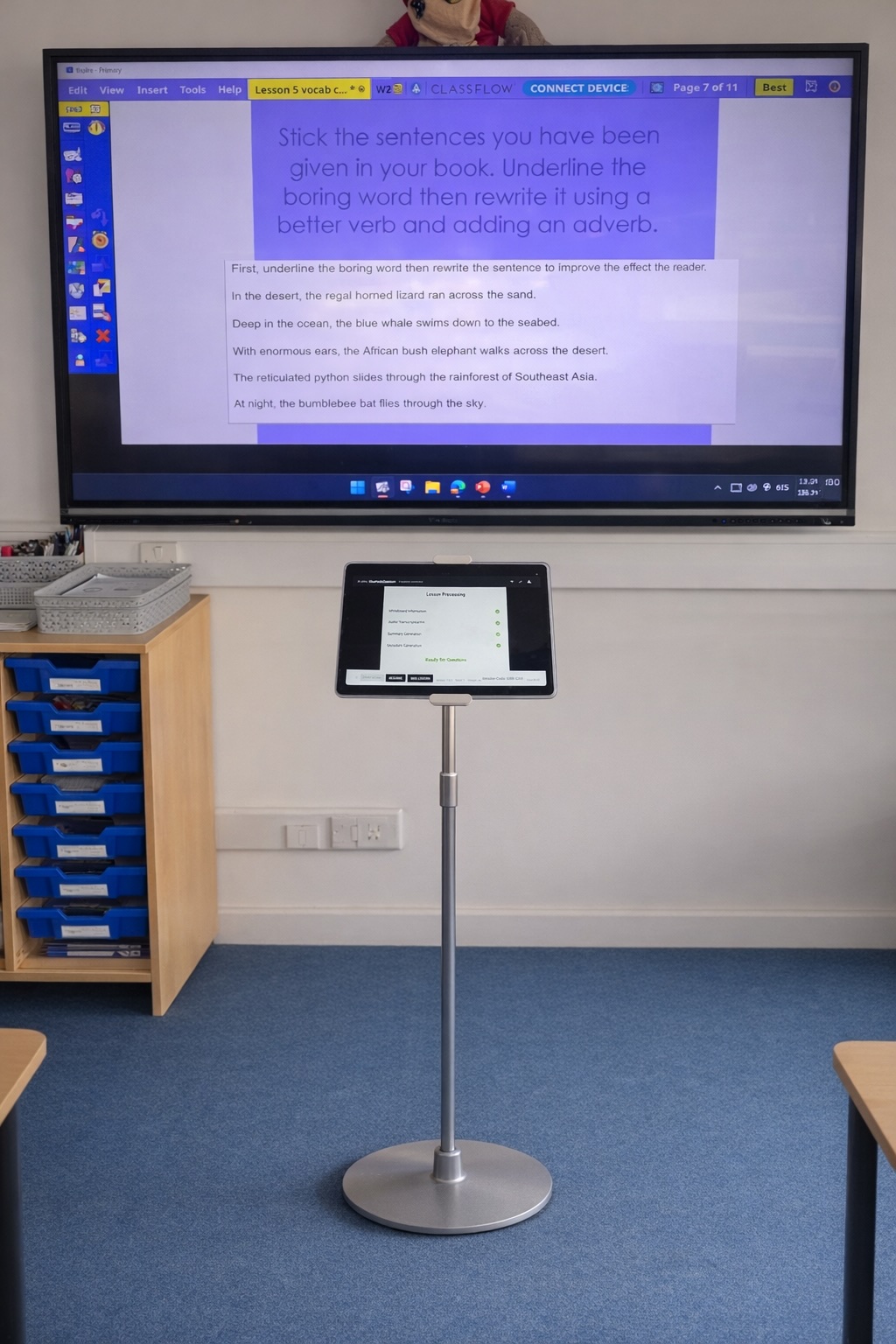
Not just another chatbot — Robyn consists of physical hardware in the classroom, experiencing the lesson in realtime.
Already deployed in over 125 UK classrooms. The teacher device watches your interactive whiteboard and listens to your teaching, while student devices provide on-demand support.
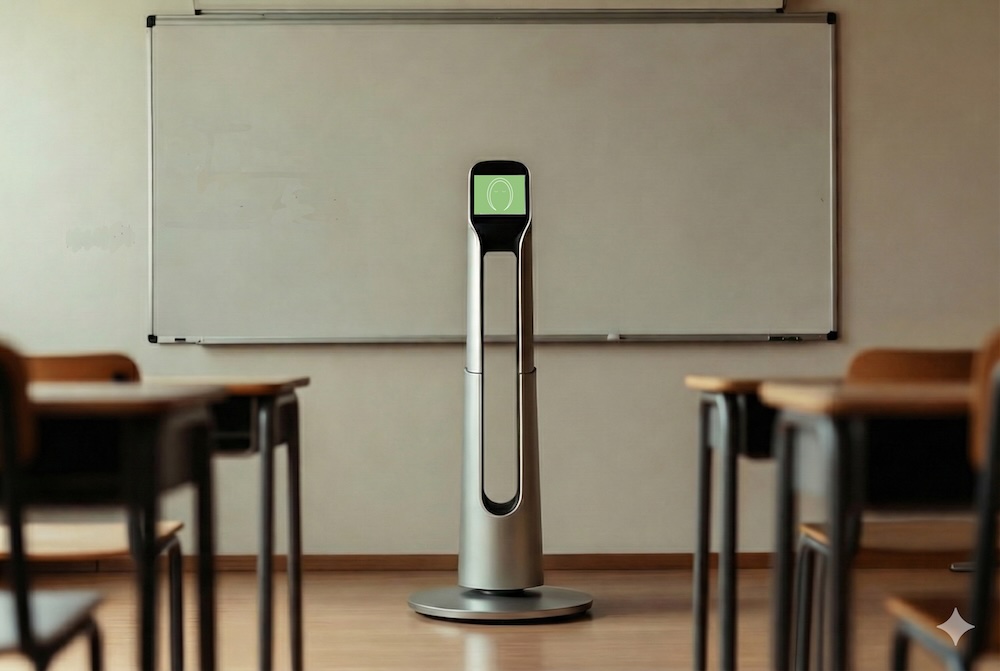
We're developing distinctive custom hardware to give Robyn a sleek new look. Same powerful AI inside, with a form factor designed specifically for the classroom.
Did you say robot?
We call Robyn a robot, but Robyn does not have humanoid form. Robyn actually consists of several connected devices in your classroom.
One device sits quietly on a stand near the board. It watches the board and listens to your teaching. You can see it in the picture above.
Pupils then use individual devices to ask questions about what you've just covered. Usually there will be three or four pupil devices around the room - pupils pick one up if they need some help. You can see one of these in the video here.
They can speak, type, or show it their work. They will received a spoken answer which also appears on a small screen.
Robyn's answer aims to help them make some progress: feedback on how to improve, or a suggestion on how to get started, or perhaps a reminder of what was on the board.
Robyn won't just tell them "the answer".
Watches your board and listens to your teaching, learning your methods in real-time.
Students pick up a small handheld device whenever they need help. They can speak, type, or show their work.
Robyn provides help based on your lesson — feedback, suggestions, or reminders. Never just the answer.
Here are some examples of real conversations showing how Robyn scaffolds learning
Priced to make Robyn affordable for every classroom.
Price includes all hardware: teacher and student devices, stand for the teacher device, headsets for the student devices, charging stations.
Pay in termly instalments, at the start of each term. The first instalment will be pro-rated to cover from the end of your trial to the end of that first term.
We will set everything up for you. We continue to own the hardware and will replace any items which break or fail (including, subject to reasonable care, failure due to accidental damage).
While Robyn can't do everything a human can do, the pricing compares very favourably to employing additional adults in the classroom. Robyn extends your reach to every pupil, freeing your existing LSAs and TAs to spend their time with students who need them most.
A typical configuration of one teacher device and five student devices costs £2,000 per year. By comparison, adding just one more adult to the room costs approximately £24,000 per year (based on a 30-hour week at £25k FTE, plus employer NI and pension contributions).
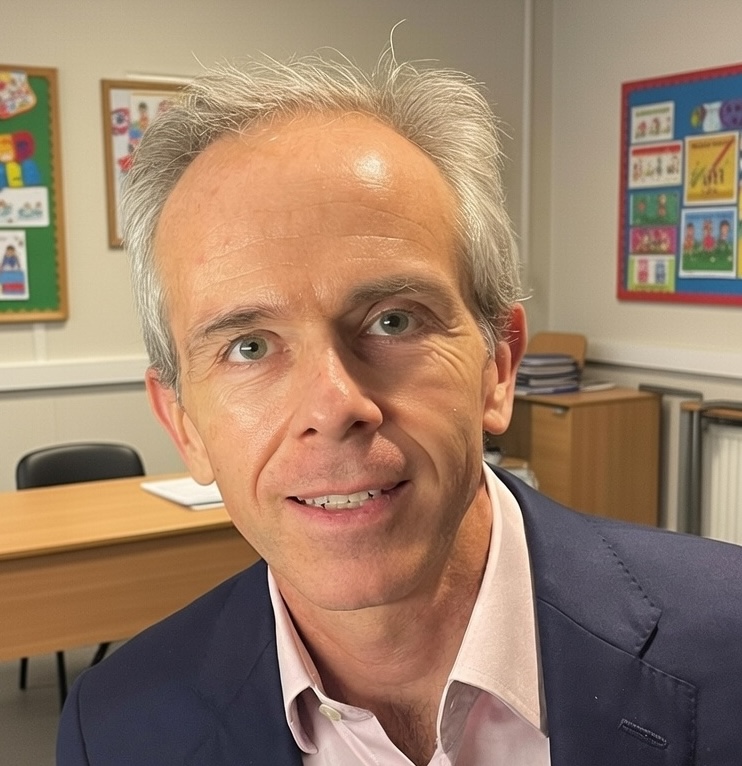
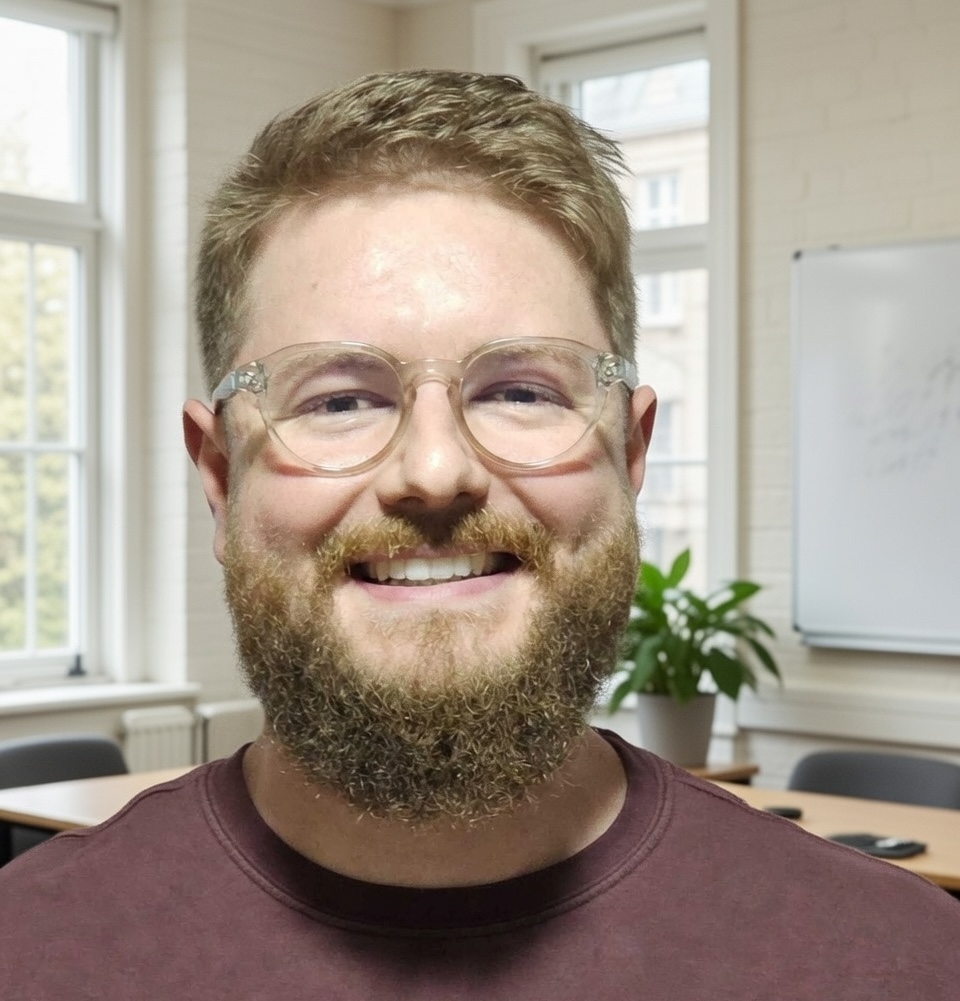
Our founder and CEO, Bruce Greig, has 15 years of school leadership experience as a school governor. He has a background in tech and business operations, and is an accredited Special Educational Needs mediator (and has conducted over 700 SEN mediations).
Teachers and teaching assistants can't get to everyone in the class. Some questions go answered, or can only be answered after the child has had to wait for a while. Some children don't want to ask a question. They would just sit quietly and hope to muddle through. Other children have very many questions, more than a single adult can reasonably spend time answering.
Robyn Robot helps children like that, and for every child it allows many more questions to be asked than could be asked if there was just one teacher in the class.
Because Robyn Robot's answers are based on what the teacher themselves has said, it allows the teacher to extend their reach to everyone in the class, almost as if they were at every child's side all the time. Indeed, that's exactly how one child described it: "It is like having three more teachers in the class".
Robyn Robot has now answered tens of thousands of questions from children in real classrooms. Some of these are mundane ("what am I supposed to be doing?") others are much more nuanced ("how old was Macbeth?"). All represent a moment where a child has received a little bit of help when otherwise they might have needed to wait for an adult.
Robyn uses minimal energy compared to other classroom equipment
In a typical day, Robyn uses about 25-50 Wh of energy (including its own power for its display and wifi and so on, and the energy it uses in data centres to process questions).
This is less than the energy needed to keep the school gate closed all day with an electromagnet (~150 Wh), far less than running the interactive whiteboard for a day (~2,000Wh) and miniscule compared to the energy needed to keep the classroom warm for the day (~50,000Wh - a number which won't fit on the graph here, so we use a single hour)
Responsible infrastructure: We use datacentres run by Google and Microsoft which use minimum 75% carbon-free electricity and are committed to water replenishment by 2030.
We'll demonstrate Robyn, set everything up, and leave Robyn with you for a few weeks at no cost.